
The Optimization Paradox: Subsystem Optimization vs. Whole System Vitality

The Optimization Paradox: Subsystem Optimization vs. Whole System Vitality

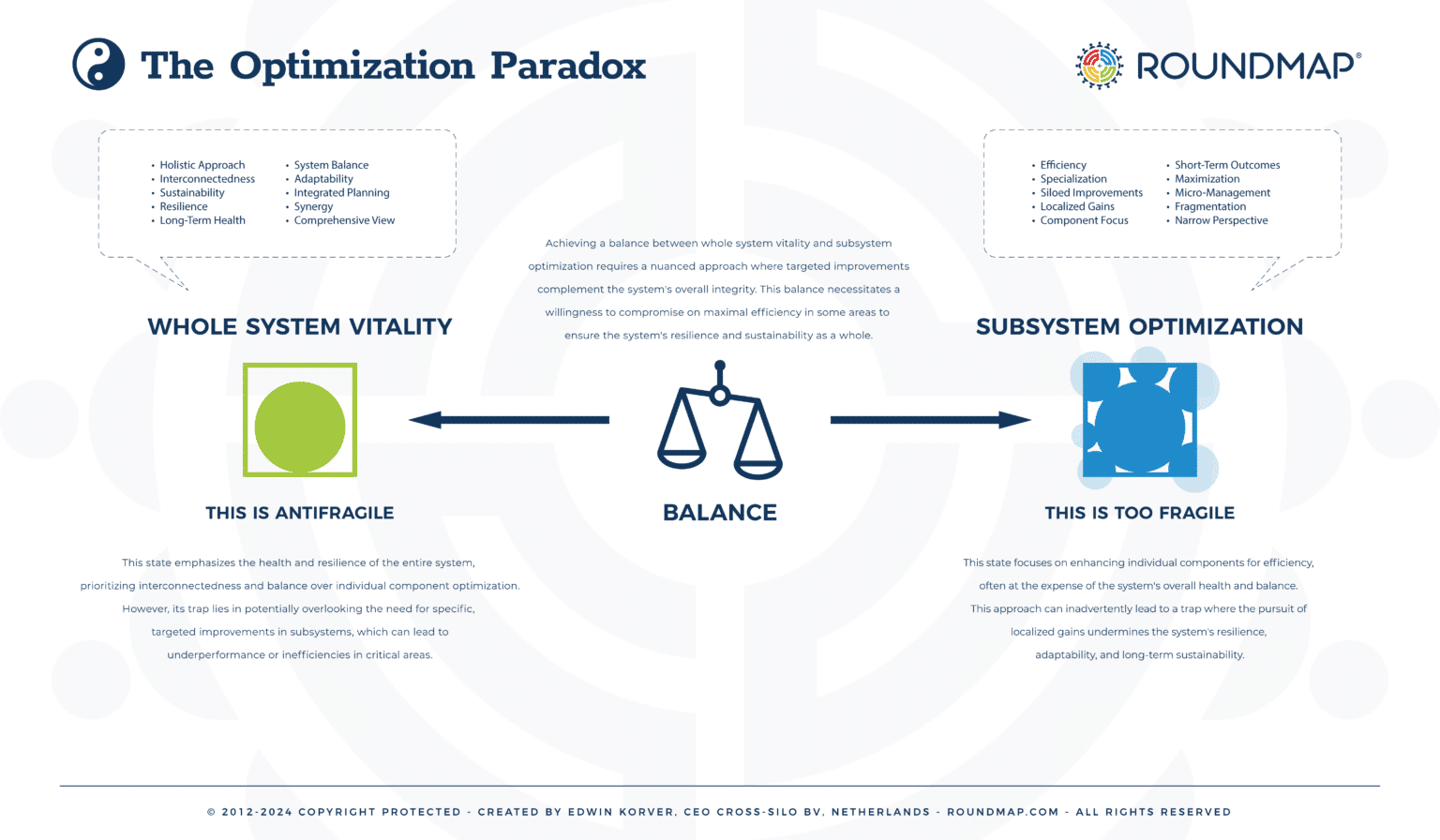
Is it possible to relentlessly pursue efficiency within individual components without endangering the health, resilience, and long-term sustainability of the entire system? How do we reconcile the drive for immediate, localized gains with the imperative to maintain the vitality and integrity of the whole?

In the pursuit of efficiency and productivity, organizations and systems designers often fall into the trap of subsystem optimization, focusing narrowly on enhancing the performance of individual components. While this approach can yield immediate improvements within specific areas, it may inadvertently compromise the entire system’s health, resilience, and sustainability. This dichotomy between subsystem optimization and whole system vitality presents a critical challenge, necessitating a strategic reassessment of how we approach system design and management.

Subsystem Optimization: A Narrow Lens

Subsystem optimization involves refining individual parts of a system to achieve maximum efficiency or output. This method, though beneficial in the short term, can lead to several pitfalls:

  • Siloed Improvements: One area’s enhancement may not translate to overall system performance gains and can even create bottlenecks or inefficiencies elsewhere.
  • Reduced Resilience: Over-optimized components can become highly specialized, leaving the system less flexible and more vulnerable to external shocks.
  • Neglected Interdependencies: Focusing on parts in isolation ignores the complex web of interactions within the system, potentially destabilizing its overall balance.

Whole System Vitality: A Holistic Approach

Conversely, prioritizing whole system vitality means considering the system as an interconnected entity, where the health and functionality of each part contribute to the system’s overall well-being. This approach offers several advantages:

  • Enhanced Resilience: By valuing the system’s adaptability and robustness, we ensure it can withstand and recover from disruptions.
  • Sustainable Performance: A holistic perspective encourages sustainable practices that support long-term health and productivity rather than short-term gains.
  • Synergistic Improvements: Understanding and leveraging the interdependencies within the system can lead to synergies, where improvements in one area positively affect others.

Navigating the Balancing Act

The challenge lies in navigating the delicate balance between optimizing individual components and maintaining the vitality of the whole system. This requires:

  • Integrated Planning: Develop strategies considering individual subsystem performance and the overall system’s health.
  • Feedback Loops: Implement mechanisms for continuous feedback, allowing for adjustments that align subsystem improvements with whole system goals.
  • Cross-Disciplinary Collaboration: Foster collaboration across different areas of expertise to ensure a comprehensive understanding of system interdependencies.
  • Adaptive Management: Embrace flexibility and adaptability in system management, allowing for iterative improvements that respond to changing conditions and insights.

We can create more resilient, sustainable, and effective systems by consciously balancing subsystem optimization with the imperative of whole system vitality. This balance is a strategic necessity and a fundamental rethinking of how we define and pursue success in complex systems.

Author

  • edwinkorver

    Edwin Korver is a polymath celebrated for his mastery of systems thinking and integral philosophy, particularly in intricate business transformations. His company, CROSS/SILO, embodies his unwavering belief in the interdependence of stakeholders and the pivotal role of value creation in fostering growth, complemented by the power of storytelling to convey that value. Edwin pioneered the RoundMap®, an all-encompassing business framework. He envisions a future where business harmonizes profit with compassion, common sense, and EQuitability, a vision he explores further in his forthcoming book, "Leading from the Whole."

    View all posts Creator of RoundMap® | CEO, CROSS-SILO.COM
Share the Post:

Recent Articles

licenced-by-cross-silo-shutterstock_2496390355
Shared Value Networks

Governing Value: From Extraction to Accountability in Living Systems

Why Capitalism Struggles with the Laws of Nature Economic theories such as Donut Economics, Earth Overshoot Day, and planetary boundary frameworks have made one thing abundantly clear: resources are finite, and human activity must operate within ecological limits. These models

roundmap-value-centricity-copyright-protected-2026
Capitalism

Value Centricity: A Viability Model for Business and Society

Let’s return to one of RoundMap’s foundations: the Business Model Matrix. Within it, I originally identified four foundational business models: Customer Centricity, Product Centricity, Resource Centricity, and Platform Centricity. At the time, these felt fundamental—not just to how companies operate,

Stay in the Loop!