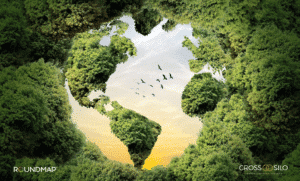
After years of studying business, value creation, stakeholder ecosystems, and the unintended consequences of our economic system, I changed our tagline to From Extraction to Regeneration.
For a long time, I focused on how organizations create value. Then I began to understand something even more fundamental:
Many of the challenges we face today are not caused by a lack of value creation, but by excessive value extraction.
When organizations extract too much from employees, customers, suppliers, communities, or nature, they may improve short-term results, but they gradually weaken the very ecosystem on which their success depends.
The breakthrough for me came when I realized that value behaves much like a living system.
When value is allowed to circulate, it regenerates.
- Trust grows.
- Knowledge accumulates.
- Relationships deepen.
- Communities strengthen.
- Innovation accelerates.
By extracting less, we often create the conditions for generating more value over time.
A healthier ecosystem creates a larger pie, more resilience, and more sustainable prosperity for everyone involved.
This insight has become the foundation beneath RoundMap®, the Regenerative Shared Value (RSV) Framework, and the broader journey toward what I call Regenomy: an economy designed not around extraction, but around regeneration.
The new tagline reflects that journey:
RoundMap® — From Extraction to Regeneration
To guide our thinking process, we developed a system called
NotesCanvas. For years, we accumulated thousands of notes in Evernote. But we came to realize that storing notes is not the same as thinking with them.
Nobel laureate Daniel Kahneman distinguished between two modes of thought: fast and intuitive System 1, and slower, more deliberate System 2. NotesCanvas is designed to support the latter. It keeps your notes, but not merely to store or retrieve them. It helps you bring them together around guiding questions, explore their relationships, and turn accumulated knowledge into deeper understanding.