
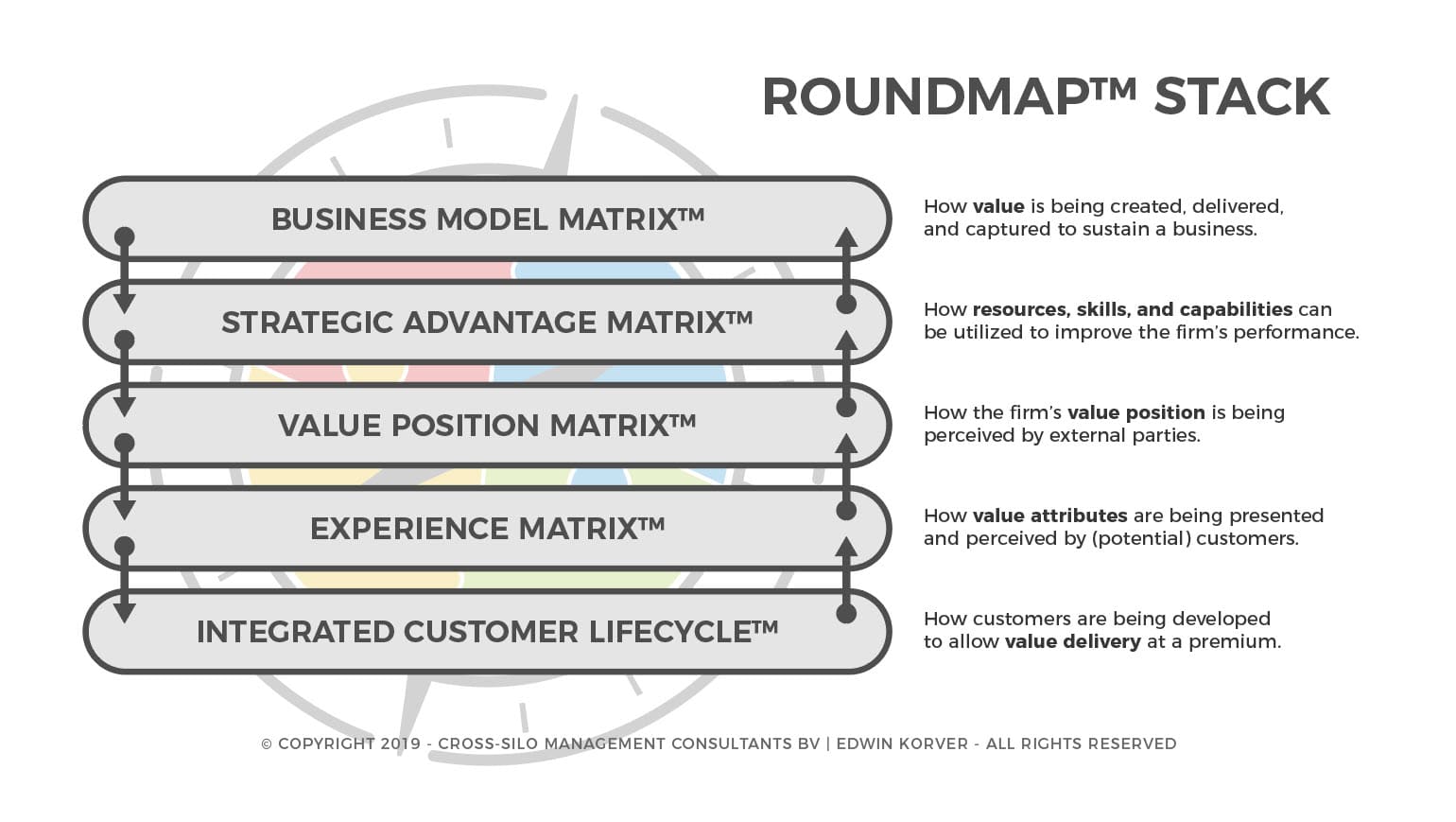
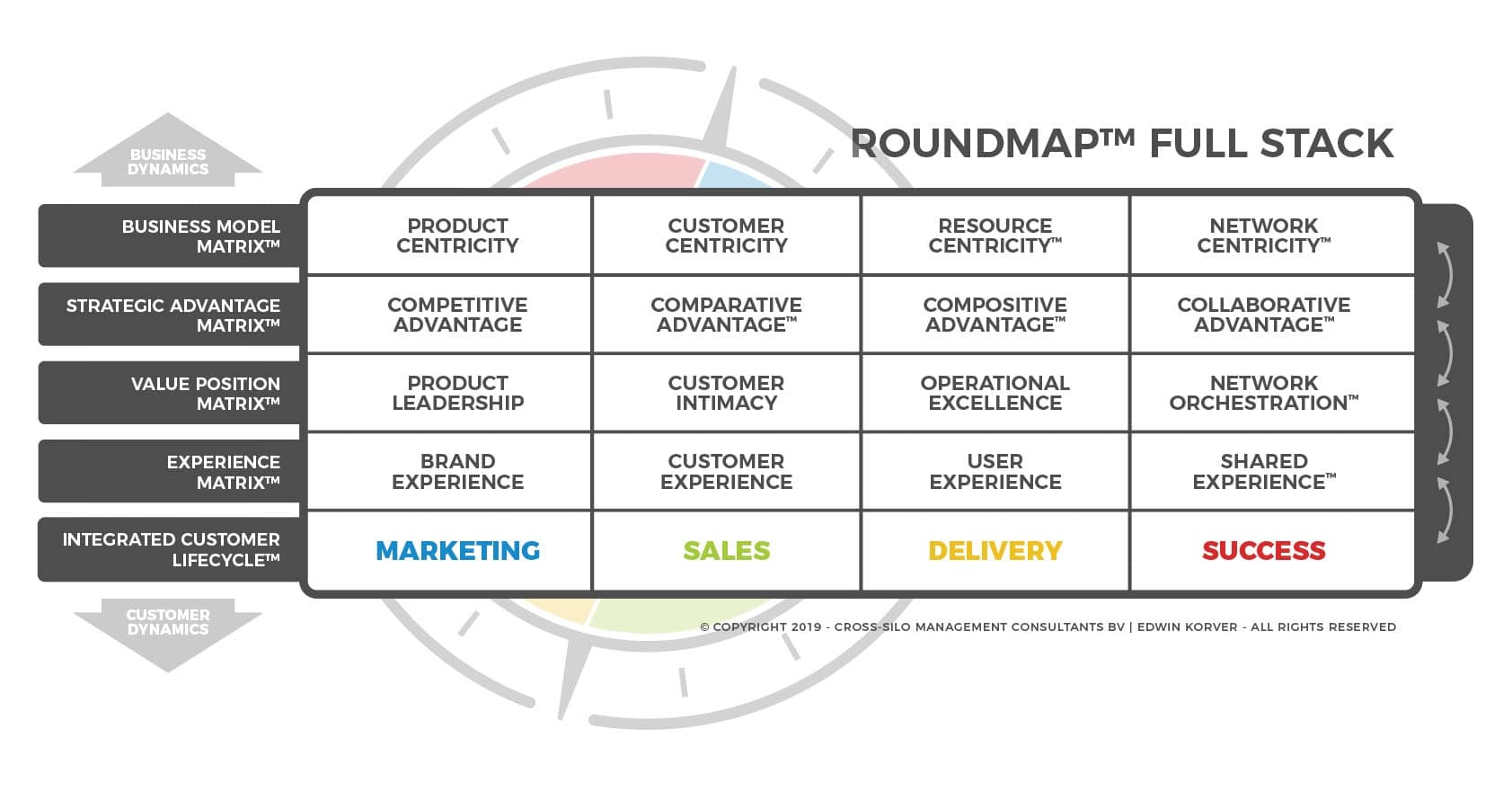
In order to comprehend the comprehensive mapping system of our framework, we have developed the RoundMap® Stack.
Case: IBM
Before 1974, IBM had a product-centric business model. Its goal was to grow market share based on a broad portfolio of IT-related products. Big Blue was a household name, and marketing was about brand experience. From 1976 onwards, while facing increased competition, the firm shifted its operations by focusing on higher-value, more profitable markets. Its shift began by being perceived as customer-intimate, followed by a full shift towards a customer-centric business. In 1994, the firm reported the most significant operating loss ever recorded in corporate history: Customer Centricity should never be applied without a companion business model.
However, the company recovered miraculously by using its in-depth customer insights to shift to a resource-centric operation, utilizing a vast team of multi-vendor system integrators (acquired from PwC’s consultancy branch). Seeing these people in action was all customers needed. Today, IBM is about to make another shift now that system integrators are no longer in high demand: it is shifting (clockwise) towards a network-centric operation, based on Watson and IBM Cloud.