

The Power of Three: Structuring Shared Value Regeneration
Beyond Value Creation In today’s dominant business paradigm, customer value creation is often held up as the gold standard of success. Yet beneath the surface,

More Than Crumbs: The Case for True Value Creation
For decades, shareholder primacy has dictated corporate decision-making, driving businesses to prioritize short-term profits and disproportionate returns to shareholders over long-term sustainability and stakeholder value.

Beyond Extraction: Why Regenerative Business is the Only Way Forward
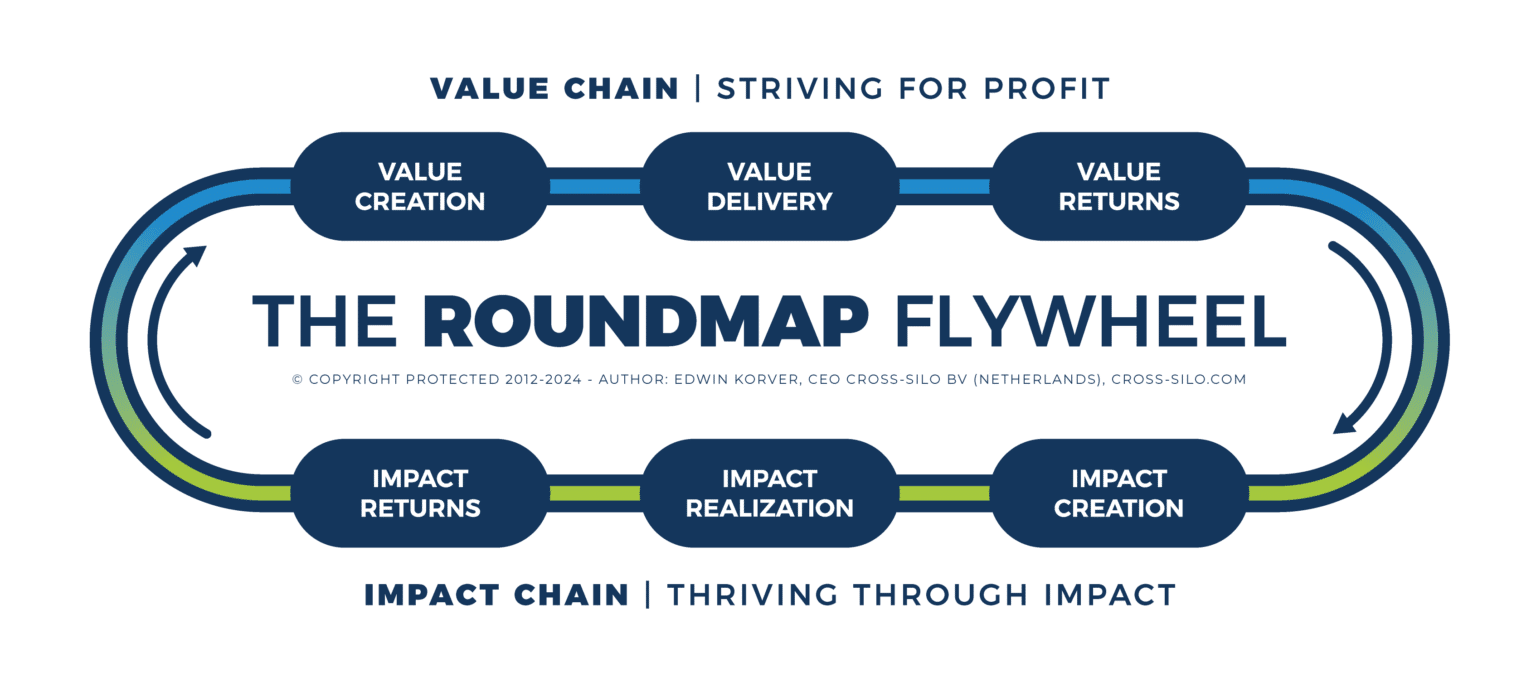
The RoundMap’s Regenerative Business Framework proposes a dual-cycle approach to business: one focused on value creation and another on impact. However, reality presents us with

RoundMap Regenerative Business Framework: Empowering the Present while Building the Future
Executive Summary The Regenerative Business Framework addresses the critical need for businesses to move beyond mere profitability toward regenerative practices that drive long-term growth and
Rethinking the Flywheel: Why Amazon’s Misinterpretation Misses the Mark
The concept of a flywheel, as originally designed, was never about spinning faster to achieve exponential growth. It was about stabilizing energy output—ensuring a steady,

From Striving to Thriving: How Amazon is a Strive-Driven Giant Failing to Thrive
Amazon has become synonymous with business success, often hailed as a master of efficiency, customer obsession, and innovation. At the heart of its growth strategy
The Flywheel of Shared Success: How Impact Drives Sustainable Growth
In the fast-paced world of business, the focus often rests on immediate value creation—developing products, closing deals, and driving revenue. While these activities generate vital

The Reciprocity Effect: How Giving Back Completes the Cycle
Ten years ago, I began developing the Customer Lifecycle—a map of frontline activities—because I saw how social media was reshaping the marketplace. It wasn’t just

Impact Strategies to Amplify Value and Mitigate Harm Across Stakeholders
What if doing the right thing wasn’t just a moral choice but a strategic one? What if amplifying your organization’s positive impact while mitigating harm

The Twin Engines of Progress: Returns on Value and Impact
At the heart of the Flywheel of Shared Success lies the powerful interplay between Value Returns and Impact Returns, both of which operate on the

From Hopping for Cash to Building Bridges: Why Self-Interest Alone Can’t Sustain Shared Prosperity
What we’re proposing with the Flywheel of Shared Success is nothing short of a call to confront and correct our deeply flawed execution of Adam

If Adam Smith would still be alive, how would he perceive our modern economic systems?
If Adam Smith were to assess the state of our modern economic systems, his critique would likely be sharp yet eloquent, reflecting the moral gravitas