
This article was derived from a post on Walmart World, that was taken offline for unknown reasons.
What Are Walmart's Shared Value Networks?
Shared Value Networks (SVNs) were created in 2020 and they are an important part of Walmart’s commitment to racial equity. With SVNs, Walmart aims to use its core strengths—such as creating job opportunities—to make long-lasting change in criminal justice, education, finance and health systems.
There are four SVNs. Each is focused on one social system. The people on these four teams study national challenges and opportunities. They use their knowledge and experience to look for ways that Walmart can influence racial equity on a large scale. The four SVNs are:
Criminal justice
Purpose Statement: We seek to kick-start and strengthen systems change efforts that prevent people from entering the criminal justice system.
Black Americans are far more likely than white Americans to be incarcerated. According to the Bureau of Justice Statistics, the Black incarceration rate at the end of 2018 was more than five times the rate among whites. In the criminal justice reform space, there are few national funders focused on criminal justice prevention, which includes reducing unnecessary incarceration, eliminating bias and fostering positive relationships with law enforcement.
Our philanthropy is focused on filling the void in criminal justice prevention initiatives by activating and sustaining systems change efforts that prevent people from entering the criminal justice system. The center is supporting research and building networks to help scale community-based prevention efforts.
The center complements the work of the Walmart criminal justice shared value network (SVN), which is focused on areas where the business intersects with the systems that make up criminal justice reform: prevention, intervention during incarceration and aftercare post-incarceration. With a focus on prevention, the center bolsters the SVN’s efforts by supporting networks that amplify emerging best practices and connect the organizations doing this work on the local level.
Education
Purpose Statement: We seek to create equitable advancement opportunities for Black and African Americans through education, skill development and credentials that meet the talent needs of businesses.
Black Americans are faced with barriers to education, employment and advancement. There is often less access to post-secondary educational opportunities, as the traditional higher education system and non-traditional post-secondary programs are costly and challenging for adults to complete without support. According to McKinsey, within the workforce, 43 percent of Black private-sector workers make less than $30,000 per year, compared with 29 percent of non-Black employees. Black Americans are also underrepresented in high demand jobs, such as software development or engineering. According to Pew Research, Black Americans make up only 9 percent of STEM workers.
Our philanthropy is focused on two areas: equitable advancement through upskilling and strengthening talent pipelines.
The center complements the work of the education shared value network (SVN) by addressing barriers to education and advancement at a societal level. To build upskilling efforts, the center is driving equitable training and advancement programs for Black workers without college degrees into more senior-level positions. The center is also investing in initiatives that develop robust talent pipelines for both traditional and non-traditional post-secondary Black talent, focusing on high demand, higher-wage jobs.
Finance
Purpose Statement: We seek to reduce the racial wealth gap by supporting and activating partners that are making strides toward financial inclusion and equity for the Black community.
Black Americans have disproportionately less access to the five primary drivers of wealth generation: homeownership, employment/income, finance, inheritance and education. In 2019, the typical white family had eight times the wealth of the typical Black family. While Black Americans make up 13 percent of the nation’s population, they only account for 4 percent of the nation’s wealth. From February to April 2020, there was a 41 percent drop in Black-owned businesses, in comparison to 17 percent of white-owned businesses.
Our philanthropy is focused on supporting the success of entrepreneurs in the Black community by helping Black-owned businesses that provide goods and/or services to the retail industry strengthen and grow their companies.
By gaining a better understanding of the underlying systems that contribute to the racial wealth gap, the center is expanding the social impact of the finance shared value network (SVN), which is focused on improving economic conditions in local communities, building upon existing supplier inclusion commitments and empowering associates. The center is activating community-led programs, research, tools and proven models that are making strides toward financial inclusion.
Health
Purpose Statement: We seek to improve health outcomes for Black households and increase access to healthier food in predominantly Black communities by providing funding for community-driven food organizations and innovators.
In certain geographies across the country, there is a life expectancy gap of 20 to 30 years between different neighborhoods within the same cities. Key drivers of this disparity in mortality rates between predominantly Black and white communities include cardiometabolic disorder and maternal and infant health. At the root of these drivers are food and nutrition insecurity, as well as many other issues that intersect and impact the health outcomes of Black households.
Our philanthropy is focused on improving access to fresh food in communities of color that lack access to nutritious food. The center supports community-based innovation to identify solutions that increase food access in these communities. To support community-driven food access solutions at scale, the center is also focused on increasing access to public and private capital and building capacity for organizations and entrepreneurs.
By filling discrete gaps and building complementary capacity to support whole systems change, the center extends the work of Walmart’s health shared value network (SVN), which is working to leverage business capabilities to improve maternal and infant health, support cardiometabolic care, prevent food insecurity and increase nutrition for Black communities.
A VP at Sam’s Club shares how Walmart is supporting social change

Shared Value Networks
In addition to his VP role, Earvin is the lead for the Shared Value Network (SVN) focused on Education—one of four SVNs. SVNs were created by Walmart in 2020 to explore ways the company can help advance racial equity for all.
Earvin is focused on improving the company’s diversity, equity and inclusion (DEI). He is also involved with planning the workforce, looking at the future of hybrid work after the pandemic, and growing HR systems and processes.
“I’m very excited about it,” Earvin shares. “There’s a lot of work that needs to be done.”
With SVNs, Walmart aims to use its core strengths—such as creating job opportunities—to make long-lasting change in criminal justice, education, finance and health systems.
“Shared value is all about matching the organization’s experience and society’s challenges. We want to do that in a way that addresses the challenge and helps remove barriers, and then eventually—because of our size and because of what we do—we can benefit society as a whole,” Earvin explains.
Education SVN
Earvin shares one example for how SVNs work in the education realm. Walmart has partnered with North Carolina Agricultural and Technical (A&T) State University through the Equity in Education Initiative (E²I).
E²I is a key initiative for the historically black university. It supports undergraduate students in business, engineering, and other professional disciplines.
The partnership gives students and professors access to our company’s expertise and knowledge. Goals include improving students’ academic work, helping them graduate on time with less debt, and preparing students for careers.
On the other side of the equation, Walmart is also focused on creating opportunities for associates. For example, Live Better U gives associates the chance to learn and grow—which helps them advance at Walmart and Sam’s Club. We recently added many HBCUs (including North Carolina A&T) to our Live Better U program.
With programs like Live Better U, associates receive free college education while the company builds a more skilled workforce.
Not Too Different
Earvin’s worked at both Walmart and Sam’s Club, and he believes the businesses have some differences.
“Everyone brings their own sense of pride and I think that’s one of the things that’s pretty cool,” Earvin says. “At Sam’s, we realize we’re part of the Walmart, Inc. family, but we’re Sam’s. And we’re Sam’s for a reason. We enjoy being scrappy and agile and innovative.”
Despite the differences, Earvin has found that people at both companies have more in common than you might think.
“At our core, we share the same values,” he says. “No matter where you work—for Walmart, Sam’s International—there’s something about being a Walmart associate. Within each of us, we recognize the altruism and the fact that we are working in service of something that is greater than each of us. We’re trying to get something done, whether it’s for a customer, a member or an associate.”

Continue Reading:

Governing Value: From Extraction to Accountability in Living Systems
Why Capitalism Struggles with the Laws of Nature Economic theories such as Donut Economics, Earth Overshoot Day, and planetary boundary frameworks have made one thing

The Power of Three: Structuring Shared Value Regeneration
Beyond Value Creation In today’s dominant business paradigm, customer value creation is often held up as the gold standard of success. Yet beneath the surface,

Mapping the Future: We’re Writing the Book on RoundMap®
At RoundMap®, we believe the future of business lies in wholeness, not fragmentation. For too long, organizations have been shaped by linear thinking, short-term gains,

More Than Crumbs: The Case for True Value Creation
For decades, shareholder primacy has dictated corporate decision-making, driving businesses to prioritize short-term profits and disproportionate returns to shareholders over long-term sustainability and stakeholder value.

Beyond Extraction: Why Regenerative Business is the Only Way Forward
The RoundMap’s Regenerative Business Framework proposes a dual-cycle approach to business: one focused on value creation and another on impact. However, reality presents us with

RoundMap Regenerative Business Framework: Empowering the Present while Building the Future
Executive Summary The Regenerative Business Framework addresses the critical need for businesses to move beyond mere profitability toward regenerative practices that drive long-term growth and

The RoundMap Flywheel: A Shift Toward Sustainable Ecosystem Resilience
What if impact creation was as strategic and intentional as value creation? What if every dollar earned didn’t just fuel a business’s bottom line but

From Striving to Thriving: How Amazon is a Strive-Driven Giant Failing to Thrive
Amazon has become synonymous with business success, often hailed as a master of efficiency, customer obsession, and innovation. At the heart of its growth strategy

Impact Strategies to Amplify Value and Mitigate Harm Across Stakeholders
What if doing the right thing wasn’t just a moral choice but a strategic one? What if amplifying your organization’s positive impact while mitigating harm

From Extraction to Contribution: Thriving Together with Shared Success
The Flywheel of Shared Success is designed to demonstrate that staying within the boundaries of responsible growth doesn’t mean limiting our ambitions—it means channeling them

The Twin Engines of Progress: Returns on Value and Impact
At the heart of the Flywheel of Shared Success lies the powerful interplay between Value Returns and Impact Returns, both of which operate on the

From Hopping for Cash to Building Bridges: Why Self-Interest Alone Can’t Sustain Shared Prosperity
What we’re proposing with the Flywheel of Shared Success is nothing short of a call to confront and correct our deeply flawed execution of Adam
Author
-
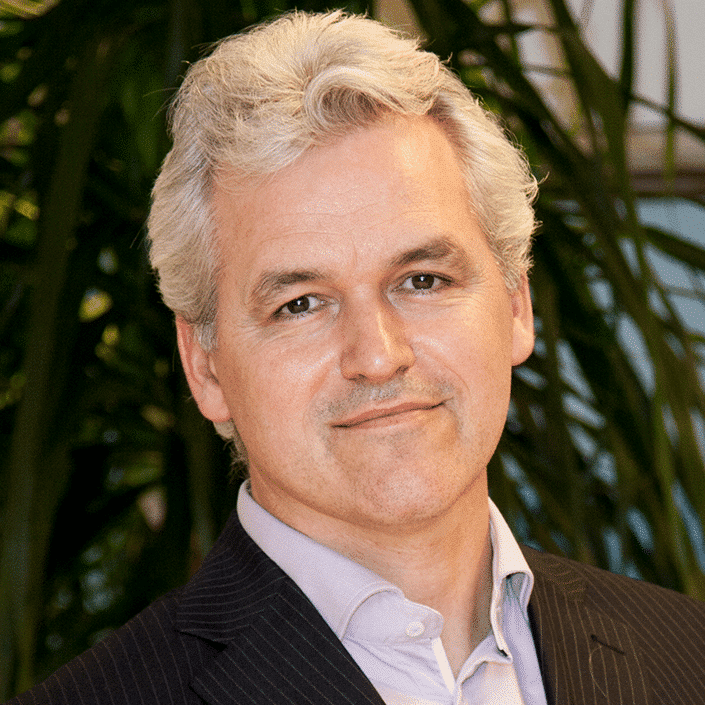
Edwin Korver is a polymath celebrated for his mastery of systems thinking and integral philosophy, particularly in intricate business transformations. His company, CROSS/SILO, embodies his unwavering belief in the interdependence of stakeholders and the pivotal role of value creation in fostering growth, complemented by the power of storytelling to convey that value. Edwin pioneered the RoundMap®, an all-encompassing business framework. He envisions a future where business harmonizes profit with compassion, common sense, and EQuitability, a vision he explores further in his forthcoming book, "Leading from the Whole."
View all posts Creator of RoundMap® | CEO, CROSS-SILO.COM